Pope Boniface VIII
Pope Boniface VIII stands as one of the most powerful and controversial figures in Dante's Inferno, a pope whose legacy is defined not by spiritual leadership but by simony, political manipulation, and the corruption of the papacy. Though he was still alive in the year 1300, the poem's narrative places him among the damned in the third Bolgia of Malebolge, where he is punished for the sin of simony—the buying and selling of ecclesiastical offices. His appearance in Canto XIX is not merely a personal condemnation but a sweeping indictment of the Church's descent into avarice and worldly power, a theme that resonates throughout the Comedy.
Identity and Historical Context
Pope Boniface VIII, born Benedetto Caetani, reigned from 1294 to 1303. He was a central figure in the political struggles of late medieval Italy, particularly in his conflicts with the powerful Colonna family and the French king Philip IV. Dante, a Florentine deeply involved in the political turmoil of his time, viewed Boniface as a primary antagonist. The pope's interference in Florentine affairs, his role in the exile of Dante's White Guelph faction, and his relentless pursuit of temporal power made him a symbol of the Church's corruption. In the Inferno, Boniface is not yet dead, but his fate is already sealed; the narrative treats him as a future occupant of Hell, a dramatic device that underscores the certainty of divine justice.
The Encounter in the Third Bolgia
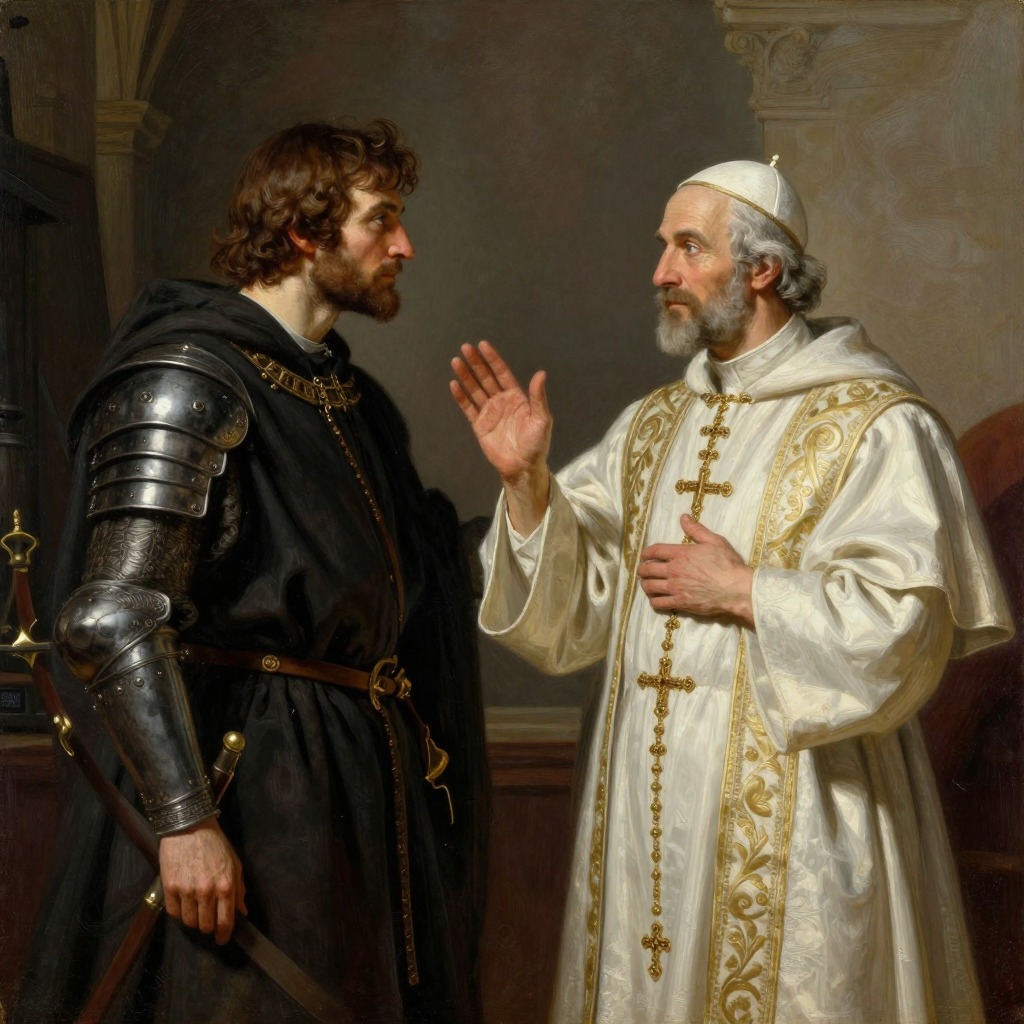
In Canto XIX, Dante and Virgil descend into the third Bolgia, where the Simoniacs are punished. The sinners are thrust headfirst into holes in the rock, with their feet protruding, and flames lick their soles. One of these, writhing more violently than the others, mistakes Dante for Boniface VIII, crying out, "Dost thou stand there already, Boniface?" (Inferno XIX, 53). This moment reveals that Boniface is expected to take his place in this very hole, and the sinner already there is Pope Nicholas III, who has been waiting for him. The mistake highlights the continuity of simony among the papacy: one corrupt pope follows another. Dante, after clarifying his identity, delivers a scathing rebuke, accusing Boniface of having "taken by fraud the beautiful Lady"—the Church—and of having "worked her woe" (Inferno XIX, 56-57).
Dante's Reproof and the Corruption of the Papacy
Dante's speech to Boniface is one of the most powerful political and theological critiques in the Inferno. He contrasts the apostolic poverty of Peter and the early Church with the greed of contemporary popes. "Our Lord demanded of Saint Peter first, before he put the keys into his keeping? Truly he nothing asked but 'Follow me,'" Dante declares (Inferno XIX, 91-93). He accuses Boniface and his ilk of having "made yourselves a god of gold and silver" and of worshiping a hundred idols where the pagans worshiped one (Inferno XIX, 112-114). The passage culminates in a reference to the Donation of Constantine, which Dante saw as the origin of the Church's temporal wealth and corruption: "Ah, Constantine! of how much ill was mother, not thy conversion, but that marriage dower which the first wealthy Father took from thee!" (Inferno XIX, 115-117). This reproof is not merely personal; it is a condemnation of the entire system of ecclesiastical avarice that Dante believed had poisoned the Church.
Narrative Role and Thematic Significance
Boniface VIII functions in the Inferno as the archetype of the corrupt pope, a figure whose sins are not only personal but institutional. His presence in the poem allows Dante to articulate his vision of a reformed Church, one that returns to the poverty and humility of the apostles. The encounter also serves as a prophecy: Boniface's damnation is presented as certain, even though he was still alive, emphasizing the timeless nature of divine justice. The episode is a key moment in Dante's broader critique of the papacy's entanglement in secular politics, a theme that recurs throughout the Comedy, from the simoniac popes in Hell to the corrupt prelates denounced in Paradise. Boniface VIII, more than any other figure, embodies the spiritual crisis that Dante believed was destroying Christendom.